
Satin vs Silk: What You Are Actually Buying
Satin is not a fibre. That single fact clears up most of the confusion in this category, and it is the reason two pieces described as “satin” can feel completely different in your hands.
Silk is a fibre — a protein filament spun by silkworms. Satin is a weave: a structure where the warp threads float over several weft threads before dipping under, which puts most of the thread surface on the face of the fabric. That is what creates the shine.
You can weave satin from silk. You can also weave it from polyester, which is what most satin clothing on the market actually is, ours included.
How they differ in practice
Drape
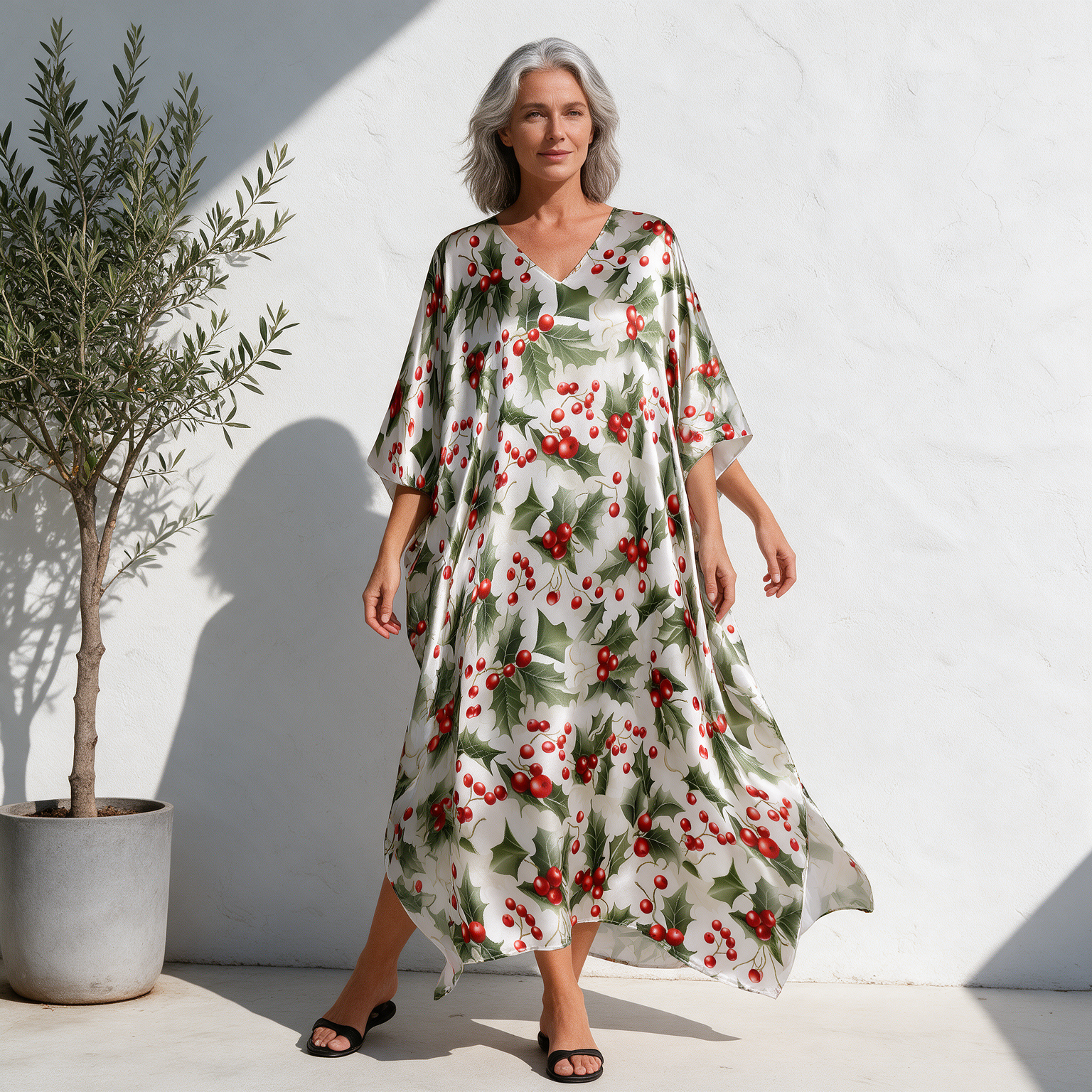
Silk is lighter and clings less. Polyester satin has more body, which is why it holds a fuller shape in a robe or a wide sleeve. Neither is better — they suit different garments. A kaftan benefits from the extra body.
Temperature
Silk regulates temperature well and breathes. Polyester does not breathe in the same way, which matters for a shirt worn all day and matters much less for a robe worn for twenty minutes in the morning.
Durability
Polyester wins comfortably. Silk is weakened by sunlight, perspiration, deodorant and most detergents. A polyester satin robe survives normal life; a silk one asks you to be careful with it.
Care
Silk generally means dry cleaning or very careful hand washing. Polyester satin goes in the machine on cold. Over a year of ownership that difference is worth real money.
Price
Silk costs several times more per metre, and prices rise with momme weight. A silk robe at the price of a polyester one is almost certainly not silk.
Where print changes the calculation
This is the part that gets left out of most comparisons. All-over printing on silk is difficult and expensive. Dye sublimation, the process behind every print we make, bonds with polyester specifically — the ink turns to gas and fuses into synthetic fibres. It does not work the same way on protein fibres like silk.
So a richly printed, edge-to-edge design at a wearable price is a polyester story. That is not a compromise we are apologising for; it is the trade that makes the print possible at all. We go into the wider fabric argument in is polyester actually bad?.
How to judge satin quality
- Weight. Thin, papery satin creases and shows every seam. Heavier satin drapes and forgives.
- Shine. A soft, liquid sheen reads expensive. A hard plastic gloss does not.
- Reverse side. Good satin has a clearly matte back. That contrast is the sign of a genuine satin weave rather than a coated fabric.
- Seam finish. Satin frays readily, so the finishing tells you more about quality than the face of the fabric does.
So which should you buy?
Buy silk if you want breathability against the skin all day, you are happy with the care routine, and you want a solid colour or a simple print.
Buy polyester satin if you want a bold all-over print, a robe or pyjama set that survives a washing machine, and a price that lets you own more than one. Our loungewear and robes sit firmly in that second camp.
Questions we get
Is satin hot to sleep in?
Polyester satin is warmer than silk or cotton. For a robe, that is usually welcome. For full pyjamas in a hot bedroom, consider what you run like at night before you size up.
Does satin snag easily?
The weave has long floating threads, so yes — rings and rough nails are the enemy. Wash in a mesh bag and keep it away from velcro.
Will the print look different on satin?
It looks richer. The smooth face of a satin weave reflects light evenly, so colours read deeper than the same print on a matte fabric. It is the most flattering surface we print on.

