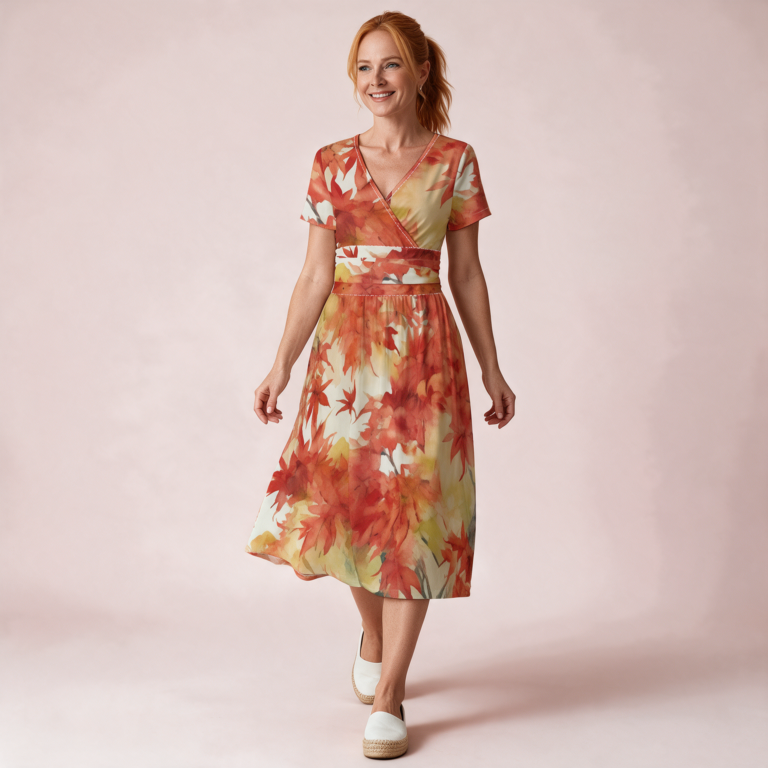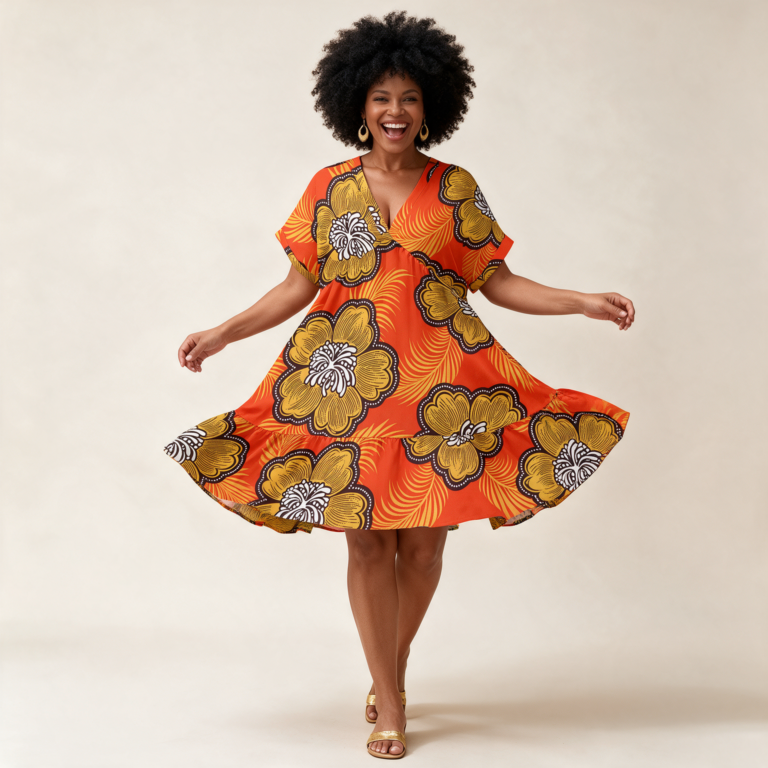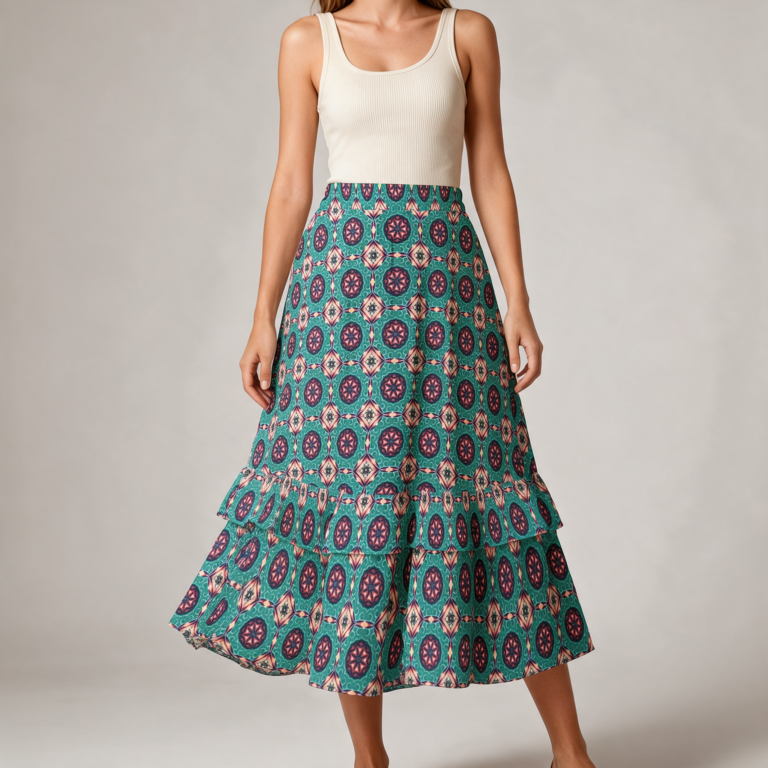
Transitional Dressing: Maxi Dresses in Fall
To wear a maxi dress in fall, add layers rather than swapping the dress out. A knit over the top, something opaque underneath, a boot instead of a sandal, and a coat that is either clearly longer or clearly shorter than the hem. A summer dress becomes a fall dress through addition, and the additions are the same four every time.
The reason this is worth spelling out is that a maxi dress resists layering in a way a skirt does not. There is no waistband to tuck into and no natural break to work with. Everything you add has to be reconciled with one continuous piece of fabric.
What changes, and what does not
The hem does not change. It sits an inch off the floor in whatever shoe you are wearing, which means a heeled boot effectively shortens the dress and a flat boot lengthens it. If a dress skimmed the ground in summer sandals, it will pool slightly in flat boots, and that is worth checking before you are out of the house.
The neckline does change, or rather what surrounds it does. A dress that worked bare in July needs either coverage or a deliberate decision to stay bare with a coat. A thin gold chain that looked right against skin can disappear entirely against a knit.
What mostly changes is opacity. Summer maxis are frequently thin, and thin fabric in low autumn light behaves differently than it does in August sun. This is the single most common unpleasant surprise, and it happens at the first properly bright day in October when someone photographs you from behind.
Image to add — 4:5 portrait (1200 × 1500)
Side-by-side of the same maxi dress worn two ways, shot as a diptych: left with flat sandals and bare arms, right with a fitted knit, ankle boots and a slip visible at the hem. Plain wall, even light.
Alt text: The same maxi dress styled for summer and for fall side by side
Layering on top
Three options, in ascending order of how much they change the dress.
A knit over the dress
The easiest and the most transformative. A fitted or fine-gauge knit worn over a maxi dress turns it into a skirt, visually, and everything from the maxi skirt playbook then applies — which is convenient, because five ways to wear a maxi skirt past summer is essentially a list of what you can now do.
Keep the knit fitted or only slightly relaxed. An oversized sweater over a full maxi dress puts two volumes in the same outfit and the dress loses entirely. If the knit is cropped or hits at the natural waist, better still: you get a waist without needing a belt.
A fine layer under the dress
Less obvious, more useful in genuinely cold weather. A thin long-sleeve merino or silk base layer worn underneath a sleeveless or short-sleeve maxi adds real warmth and reads as deliberate, particularly in black under a printed dress.
This works far better than most people expect, and it is the trick that keeps a summer dress in rotation into November. It fails only when the base layer is visibly a different weight or sheen at the neckline, so match matte to matte.
Outerwear
The length rule from skirts applies with more force here, because there is no visual break to hide behind. The coat should be clearly longer than the dress or clearly shorter. Anything landing within a few inches of the hem creates a horizontal line across your shin.
A long coat over a maxi dress is one of the better things you can wear in a cold month. A cropped jacket is the sharp alternative. The hip-length coat is the difficult one, and open is the answer.
A scarf, for the smallest possible change
The lightest intervention available, and the one to reach for when a dress is almost right for the weather rather than obviously wrong for it.
A silk square knotted at the neck covers the gap a summer neckline leaves without adding a layer you will overheat in indoors. It also solves the problem of jewellery disappearing against knitwear, because it sits above the knit rather than under it.
Pull the colour from the dress rather than matching it exactly. If the dress is printed, a plain scarf in one of its quieter tones is the safer choice than a second print, unless the two differ clearly in scale.
The practical advantage over a knit is that a scarf comes off in one movement and goes in a bag. Layers you can remove without rearranging yourself are worth more in October than layers you commit to at the door.
The waist problem
A maxi skirt hands you a waist. A maxi dress does not, and this is the real difference between the two garments in fall.
Without a defined waist, a maxi dress under a coat can read as a single column of fabric from shoulder to floor. Some people want exactly that and it can look excellent. If you do not, you have three options and they are all small.
- A narrow belt at the natural waist. Narrow, and in a colour already in the dress. This is the most direct fix and the one that most changes the silhouette.
- A cropped knit that ends at the waist. Creates the break without adding hardware, and is warmer.
- An open coat with a defined shoulder. Gives structure at the top rather than the middle, which suits people who dislike anything at the waist at all.
If the dress is printed, think about where the belt lands before you commit. A belt through the middle of a dominant motif relocates the focal point to your waist, which may or may not be what you want — building outfits around a printed statement piece goes into where the eye lands and why it matters.
Legs and feet
The shoe carries more of the seasonal signal than anything else in the outfit, which is lucky, because it is the cheapest thing to change.
An ankle boot under a maxi hem is the reliable answer. Keep it dark, keep the shaft hidden under the hem, and avoid a contrasting colour at the ankle unless you actively want your leg line cut there. A knee boot works equally well and nobody will ever see it, which is either a waste or a pleasure depending on your temperament.
Underneath, opaque tights or a fine base layer if the dress is thin enough to need it. Tights under a maxi are invisible and add a surprising amount of warmth. The static point applies here as it does with skirts: a slip between the tight and the dress stops the fabric climbing your legs.
Flat boots read casual and lengthen the hem. Heeled boots read dressy and shorten it. Neither is more correct and both change the dress more than you would guess from looking at them.
Image to add — 3:2 landscape (1800 × 1200)
Close crop at ankle height: a maxi hem falling over a dark flat ankle boot, an inch of clearance from the pavement, dry leaves nearby. Shallow depth of field, low angle.
Alt text: A maxi dress hem falling over a dark ankle boot with an inch of clearance
When the fabric is too thin
Most summer maxis are thin. That is what makes them good in July and awkward in October, and there are only really three answers.
A full slip in a colour matched to the dress solves opacity completely and adds a little warmth. It is the least visible fix and the one worth owning in black and in cream.
A base layer solves warmth but not opacity, so in a genuinely sheer dress you may need both, which is less cumbersome than it sounds because both are thin.
Or accept it and let the dress be an indoor garment for the season — worn to dinner under a proper coat, taken off at the door, never actually outside for more than the walk from the car. This is a legitimate strategy and quietly how most people wear their best dresses anyway.
Image to add — 4:5 portrait (1200 × 1500)
A thin maxi dress held up against a window with a matched slip behind it, showing the difference in opacity between the two halves of the frame. Backlit, plain interior.
Alt text: A thin maxi dress held to the light beside a slip showing the difference in opacity
Three outfits from one dress
The method applied to a single printed maxi, moving from September to December.
- Early fall. Dress as-is, dark ankle boot, fine gold chain, denim or leather jacket carried rather than worn. Nothing underneath. This is the dress doing the work.
- Mid fall. Fitted ribbed knit over the top in a colour pulled from the print, narrow belt at the natural waist, ankle boot, structured bag. The dress has become a skirt and reads completely differently.
- Late fall into winter. Long-sleeve base layer underneath, slip for opacity, opaque tights, flat knee boot, full-length coat left open. Warm enough for a cold day, and the dress is still visibly the point.
One dress, three months, three outfits nobody would identify as the same garment. That is the whole argument for a maxi dress in a fall wardrobe, and it is why a long printed dress tends to earn its place faster than something more obviously seasonal.
The version of this with a fixed date attached — an autumn wedding, where the dress has to work in a church at two and a room at nine — has its own constraints, and what to wear to a wedding in your forties covers those.